
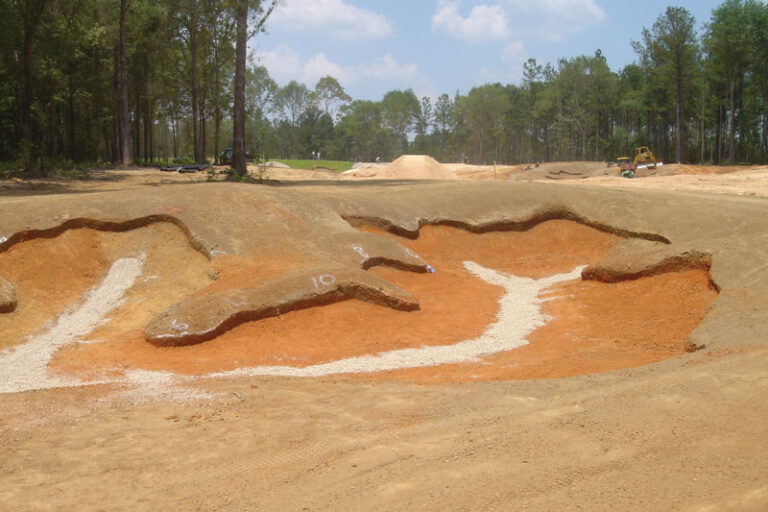
Water is not typically considered a capital expenditure until it is too late. When owners and boards think about capital improvements, clubhouses and carts and improvements come to mind versus the systems that make a golf course resilient in the face of the next storm or drought or water conservation order.
Those systems are usually buried six feet below the surface or in a bunker. The courses which are managing water best made those kinds of investments many moons ago.
Here are the five places to start.
1. The drainage grid no one thinks about until it needs to be replaced
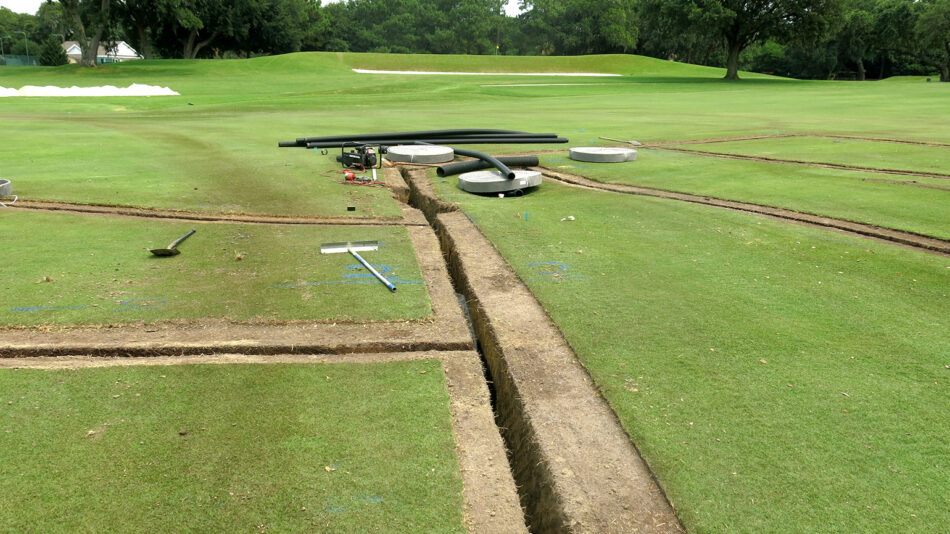
Drainage is one of the most overlooked capital investments on a golf course. Tile lines, French drains, and catch basins often receive attention only after a modest storm leaves the course unplayable.
A properly drained course can recover from the same rainfall in hours rather than days. Golfers may never see the infrastructure below ground, but they notice whether the course is open.
The same principle applies to irrigation. Replacing older time-clock systems with ET-based smart controllers and rootzone moisture sensors can improve playing conditions while reducing unnecessary potable water use.
USGA research shows that an average 18 hole course uses 312,000 gallons of water per day, so ‘meaningful percentages’ can represent tens of thousands of gallons shaved off the daily water usage.
ASGCA case studies also show what those savings can look like in practice. At Yintai Hongye Golf Club, a combination of irrigation-system improvements, reduced irrigated areas and “firm and fast” turf management cut water use by approximately 20–30%, while also supporting better playing conditions.
2. The rootzone itself has to be built to shed water
The next hidden investment is in the rootzone medium itself. For USGA-spec greens, that means an engineered soil mix of approximately 90% sand and 10% OM by weight, which allows for rapid infiltration rates of several inches per hour. The infiltration rates are dependent upon that 90% sand; too high of a percentage of fines and anything lower than 90% sand and the rootzone medium becomes a water magnet, retaining moisture instead of shedding it. The ramifications of that are obvious: unhappy golfers, a slower course, and a lack of proper drainage.
It’s a construction decision at build versus renovation with no short term savings if the wrong material is specified. It’s 10-15% of capital expenditures to do it right at build or 50% of capital expenditures to remediate a poorly constructed green and then years of unhappy golfers to boot if the wrong material is specified.
3. The bunker sand is a specification decision, not a commodity purchase

Bunker sand is one of those seemingly innocuous purchases that ends up being massively expensive if the wrong specs are chosen. The difference between a bunker which takes half a day to drain after a rainstorm and one which is ready to play in a matter of hours is largely in the type of sand used; sand which holds moisture after saturation leads to a sunken bunker with footprint marks which require extensive grooming to open up while a fast draining bunker recovers quickly after saturation.
The proper bunker sand spec also prevents the bunker from ‘grinding in,’ which causes compaction issues and the same footprint issues as the sunken bunker. The right bunker sand maintains its drainage and playability after successive rainstorms as opposed to after the first storm of the season.
It’s a one-time purchase of bunker sand, which ends up being a recurring cost if the wrong sand is purchased. The higher cost sand, which drains quickly and resists compaction, will save money in the long run by eliminating the need to replace the sand every year or every few years.
In the meantime, using a liner to create a perched water table in the surrounding profile will help prevent the bunker from becoming a sunken water hazard after a rainstorm; that is, unless the course has decided to take on the recurring cost of sand replacement after every storm.
4. The storage and re-use of water change the calculus entirely
The fifth major hidden investment is in water storage and re-use, which most forward-thinking boards will embrace after seeing the figures for either a retention pond or connection to a reclaimed water source.
Capturing stormwater runoff and storing it for later use with the ability to reuse any water which would have gone down the drain represents an opportunity to turn a liability (stormwater) into an asset (water for the irrigation system) and hedge against water conservation orders with municipal water restrictions.
The return is two-fold:
- First, the ability to capture and store water which would have gone to waste anyway is an immediate boon to reducing water use.
- Second, a connection to a reclaim water source decreases the reliance on potable water for irrigation, which becomes even more important during drought restrictions. For courses that can afford a retention pond or connect to a municipal reclaimed water source, the calculation is fairly straightforward.
Either option can provide some protection against water conservation orders while helping maintain playing conditions during drought.
Every gallon supplied from a recycled source is one less gallon purchased through the regular water system.
At the same time, every acre-foot of storage capacity provides an additional buffer against future restrictions.
Given the tens of thousands of gallons of potable water needed for the daily irrigation of an average course, the economics are hard to beat.
5. Compaction and thatch quietly undo everything else
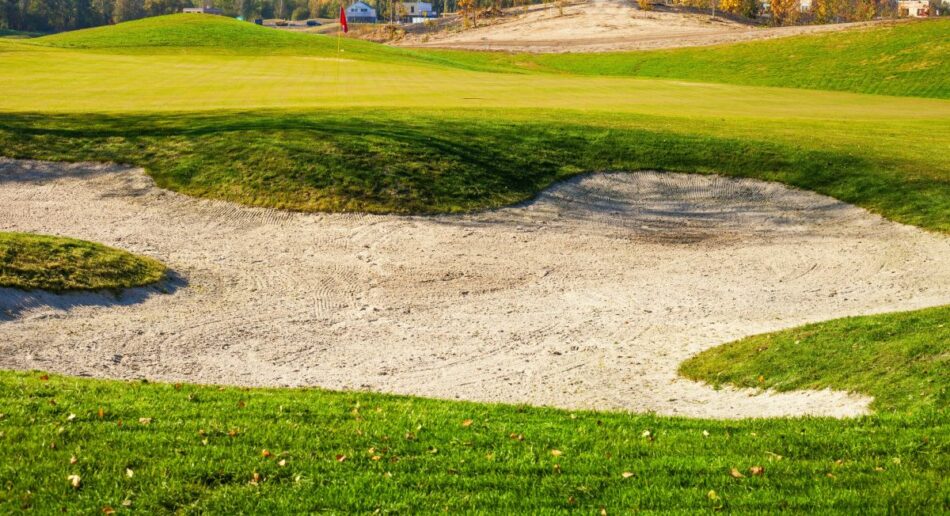
The other factor that will determine how well the previous investments hold up over time is how effectively the golf course’s primary playing surface allows the drainage grid, smart irrigation system, and rootzone to do their jobs.
Regular core aeration on a sand-based profile is one of the most practical and cost-effective ways to maintain that performance without creating excessive seasonal costs.
Frequent sand topdressing, aggressive late-season core aeration, and deep-tine aeration in late fall are not cosmetic touches. They are essential to maintaining firm and fast playing conditions.
That maintenance schedule also gives superintendents an important early-warning system. Aeration, topdressing, and routine moisture checks can reveal areas where water is no longer moving through the profile as intended.
Warning signs can include:
- turf that stays soft longer than surrounding areas;
- recurring puddles after rain;
- sections that recover noticeably more slowly;
- localized areas that consistently hold excess moisture.
Those symptoms may indicate a local drainage or compaction problem rather than a course-wide irrigation issue.
Catching these patterns early matters because minor surface problems can develop into expensive infrastructure issues when left unresolved. The objective is not to respond to every wet area with another capital project, but to use routine maintenance observations to identify where further investigation is actually justified.
The pattern is obvious
The pattern is clear across all five hidden investments. Courses that spend early to prepare for storms, droughts and water restrictions usually perform better than those forced into expensive repairs later.
Upgrading drainage, irrigation controls and bunker specifications before problems escalate can reduce long-term costs and limit disruption. The same applies to proactive maintenance that prevents compaction, thatch and related damage to drainage or irrigation systems.
Boards and owners that treat water infrastructure as a capital priority, rather than defer maintenance, put their courses in a stronger position. They are more likely to remain open, protect playing conditions and avoid repeated repair costs.
Water challenges are inevitable. The real question is whether the course is prepared before they arrive.