

Scaling wholesale operations on Amazon requires removing yourself from the repetitive, time-consuming work that stalls growth.
The most direct way to do that is by shifting product handling, compliance checks, labeling, bundling, and shipment creation to an FBA prep center. A prep center makes scaling possible because it replaces the operational bottlenecks that occur when sellers try to manage purchasing, inbound shipments, and Amazon compliance work from their own homes or warehouses.
In practice, wholesale sellers scale faster when they move prep out of their workflow, reduce turnaround times, and maintain consistent shipment volume without sacrificing accuracy.
This article explains exactly how an FBA prep center enables that scale, what changes operationally, and what the data shows about growth when sellers outsource prep.
Why Wholesale Sellers Hit a Scaling Wall Without Prep Support
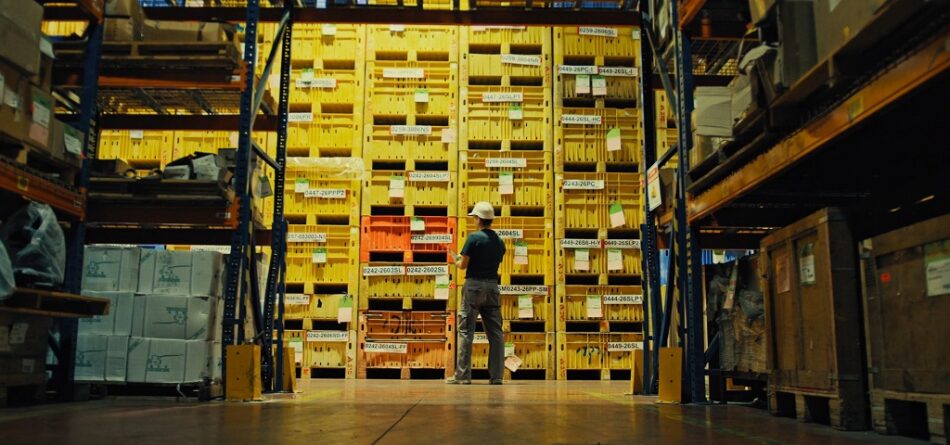
Wholesale sellers typically begin with manageable order sizes: a few cases from distributors, a handful of brands, and a shipment frequency that does not exceed their ability to process boxes manually. The issues begin once purchase volume grows. Case packs become inconsistent. Cartons arrive damaged. Labels do not match.
Mixed SKUs require segregation. Amazon’s FBA requirements change multiple times per year. Each of these variables compounds when inventory volume increases, and sellers quickly reach a point where operational work consumes more hours than product sourcing.
The Amazon marketplace continues to tighten requirements around inbound shipments and packaging. In 2024 and 2025, the most common compliance failures reported by third-party sellers involved insufficient packaging protection, incorrect barcodes, and unit prep that did not meet category-specific standards.
All three of these issues disproportionately harm wholesale sellers because they often receive goods in manufacturer packaging that does not match FBA specifications. As volume grows, time spent on re-bagging, labeling, and inspections surpasses time spent on acquiring profitable inventory.
A prep center resolves this by introducing a predictable, repeatable workflow that is designed for volume. It eliminates the scaling wall by absorbing the work that becomes unmanageable for sellers operating alone.
Core Functions a Prep Center Takes Over – and Why They Matter for Scale
A professional prep center operates as a specialized logistics unit built around Amazon’s FBA framework.
The most important contribution to scale comes from task displacement: every operational step moved out of the seller’s workflow creates more sourcing capacity. Wholesale businesses scale not because sellers work more hours, but because they reduce operational drag.
What Tasks Actually Transfer to the Prep Center?

| Operational Task | Seller Responsibility (Without Prep) | Prep Center Responsibility (With Prep) | Impact on Scaling |
| Receiving shipments | Manual box check-in and count verification | Full receiving, carton verification, and recording | Free hours per week and reduces errors |
| Quality inspection | Unit-by-unit checks, often inconsistent | Standardized inspection process | Prevents stranded inventory and negative feedback |
| Labeling | Hand-applied labels for every SKU | Automated or batch labeling systems | Dramatically increases throughput |
| Polybagging / bubble wrapping | Manual bagging and sealing | Machine-assisted or professional-grade prep | Faster and compliant with category rules |
| Bundling/multipacks | Hand-assembled packs | Assembly line workflow | Enables expansion into more SKUs |
| Shipment creation | The seller must build Amazon shipments manually | Prep center builds and dispatches shipments | Reduces workflow complexity |
| Storage | Home garage or a small rented space | Commercial racking system | Supports large PO volume |
When wholesale sellers analyze where time disappears, labeling, quality checks, and shipment creation account for most of the drain. These processes scale poorly when internal.
Throughput, Speed, and Predictability: The Three

Wholesale inventory is volume-driven. Sellers succeed when they turn over consistent shipment cycles and maintain enough inbound flow to avoid stockouts or slowdowns. A prep center creates the necessary operational infrastructure in three ways:
1. Throughput Capacity
Prep centers process thousands of units daily using batch methods and standardized workflows. A single seller working from home cannot replicate this capacity. Throughput determines how many SKUs a seller can manage simultaneously. Scaling wholesale means increasing SKU count, purchase order size, and shipment frequency. Without external throughput, growth stalls.
2. Speed of Turnaround
Turnaround time (TAT) determines how quickly purchased inventory starts generating revenue. The industry average TAT among professional prep centers ranges from 24-72 hours, depending on service tier. Sellers working alone often need several days – or weeks – before they can complete prep. Faster turnarounds mean quicker restocks and shorter cash conversion cycles.
3. Predictability and Consistency
Scaling wholesale requires planning reorder cycles. Sellers must know exactly when shipments leave the prep center. Predictable turnaround times allow accurate forecasting and more aggressive purchasing.
Cost Structure: Comparing In-House Prep vs. Using a Prep Center
Outsourcing always raises the question of cost efficiency. Most wholesale sellers discover that using a prep center becomes cheaper once their order volume crosses a modest threshold. When sellers consider time value, error costs, storage fees, and the opportunity cost of not sourcing, outsourcing creates a measurable net gain.
Cost Comparison Table
| Cost Factor | In-House Prep | Prep Center | Financial Impact |
| Labor | Seller or hired workers | Included per-unit fee | Prep centers stabilize labor costs |
| Space | Rent or personal storage | Commercial warehouse | Lower overhead for the seller |
| Supplies | Purchased continuously | Included or discounted | Reduces variable costs |
| Errors / Non-compliance | Seller bears full risk | Prep center corrects errors | Fewer penalties and reimbursements |
| Time | High commitment | Nearly zero | More sourcing time increases revenue |
The key economic advantage is the shift from variable confusion to fixed, predictable per-unit cost. This predictability makes scaling possible.
How an FBA Prep Center Improves Distributor Relationships
Wholesale distributors value reliability. Sellers who frequently change ship-to addresses, reject pallets due to limited receiving space, or delay PO processing because they cannot handle volume often receive lower priority or lose access to certain brands.
A prep center solves the logistics friction that frustrates distributors. Commercial receiving docks accept LTL freight without issues. Inventory is checked on the same day, which prevents delays that cause distributors to flag accounts as “slow receivers.”
The prep center’s ability to process high-volume bulk shipments allows sellers to take advantage of distributor promotions, quarterly liquidation deals, and deeper case-pack discounts.
When sellers no longer worry about space or labor, they can purchase more aggressively – a clear advantage in competitive wholesale categories.
Strategic Benefits: Scaling From 10 SKUs to 300 SKUs
Scaling wholesale requires SKU expansion. Most sellers hit a natural ceiling between 30–60 SKUs when handling prep internally. Beyond that, time requirements multiply.
An FBA prep center enables SKU growth because it introduces standardized processes that do not change when the SKU count doubles or triples.
How SKU Count Affects Operational Complexity
| SKU Count | Operational Load Without Prep | Operational Load With Prep | Result |
| 10 SKUs | Very manageable | Minimal | Easy to self-manage |
| 30 SKUs | Noticeable overhead | Minimal | Still scalable |
| 60 SKUs | Operational pressure begins | Minimal | Prep becomes essential |
| 100+ SKUs | High error rate, long processing times | Predictable workflow | Sellers focus on sourcing |
| 200+ SKUs | Nearly impossible to self-manage | Stable, repeatable | Enables large-scale growth |
Wholesale success often depends on diversification across brands and product lines. Prep centers remove the operational barrier to SKU expansion.
Integrating a Prep Center Into Your Amazon Workflow
Transitioning to a prep center should not feel disruptive. The most effective process is:
- Establish a consistent receiving workflow
- Communicate SKU list, labeling preferences, and prep rules
- Allow the prep center to manage defect identification
- Approve shipment plans or allow full automation
- Track inventory movement via shared spreadsheets or software
The best prep centers maintain transparent communication and provide real-time visibility into receiving, prep, and shipment creation.
Many sellers rely on services like Dollan Prep Center, particularly because standardized receiving workflows and predictable TAT help stabilize inventory cycles. Services like these support large LTL shipments, high-SKU wholesale catalogs, and long-term scaling strategies.
How Prep Centers Reduce Amazon Compliance Risk
Amazon updates packaging and prep rules regularly. Ignoring these updates can result in inbound refusals, stranded inventory, or fee penalties. Wholesale sellers encounter higher compliance risk because distributor shipments do not always meet Amazon’s exact requirements.
Prep centers reduce this risk through:
- Standardized unit prep based on category requirements
- Automated label verification
- Quality control protocols that catch defects before items reach FBA
- Regular training on Amazon’s updated compliance rules
Common Compliance Failures a Prep Center Prevents
| Compliance Issue | Effect on Seller | How Prep Center Prevents It |
| Missing FNSKU labels | Stranded inventory | Automated labeling systems |
| Non-compliant polybags | Inbound refusal | Correct sizing and suffocation warnings |
| Incorrect multipack labeling | Listing suppression | “Sold as a set” labels applied correctly |
| Damaged packaging | Negative feedback | Inspection and repackaging |
| Wrong expiration date format | Disposals at FBA | Proper date verification |
When scaling wholesale, even a 1–2 percent compliance error rate becomes costly at large shipment volumes. Prep centers keep that rate as close to zero as possible.
Data: How Outsourcing Prep Impacts Revenue Growth
Wholesale sellers who outsource operational work generally grow faster because they allocate more hours to sourcing. While exact outcomes vary, several patterns remain consistent across reports from 3PLs, prep centers, and seller communities:
Documented Results From Sellers Scaling With Prep Support (Example Analysis)

| Metric | Before Using Prep | After Using Prep | Observed Effect |
| Weekly sourcing hours | 8–10 hours | 20–25 hours | More profitable PO acquisition |
| Average SKUs managed | 40–70 | 120–300+ | SKU expansion drives revenue |
| Shipment frequency | 1–2 per week | 3–7 per week | Faster restocks, higher Buy Box retention |
| Quarterly revenue | Baseline | +25% to +65% | Increased throughput and sourcing time |
| Cash conversion cycle | Slower | 20–35% faster | Reduced lag from PO to sale |
The most important trend is not necessarily cost reduction but revenue expansion. By removing operational work, sellers create additional capacity for product acquisition, which is the actual driver of wholesale profitability.
Choosing the Right FBA Prep Center for Wholesale Scale
Not all prep centers are designed for wholesale. Sellers should evaluate:
- Turnaround time consistency
- Ability to handle LTL and palletized freight
- SKU tracking accuracy
- Transparent communication and reporting
- Geographic proximity to suppliers or Amazon FCs
- Storage cost structure
Prep Center Evaluation Table
| Selection Factor | Why It Matters | What Wholesale Sellers Should Look For |
| Turnaround time | Determines inventory velocity | Standard 24–72 hour TAT |
| Bulk receiving capability | Distributors often ship pallets | Dock availability and pallet handling |
| Prep accuracy | Prevents compliance issues | Documented QC processes |
| Location | Affects shipping cost | East Coast centers reduce inbound freight for many suppliers |
| Software | Inventory visibility | Real-time dashboards or shared sheets |
| Pricing structure | Impacts margins | Transparent per-unit pricing |
Wholesale scaling depends on stability. The right prep center becomes an operational backbone.
Bottom Line
Once a prep center is integrated, wholesale businesses undergo measurable structural changes:
- The seller’s daily workload shifts from physical labor to sourcing, supplier outreach, repricing, and brand negotiations.
- Shipment cycles become predictable, averaging multiple dispatches per week.
- Purchase order size increases because receiving constraints disappear.
- Cash flow stabilizes due to faster inventory turnover.
- SKU portfolios expand because operational bottlenecks no longer prevent growth.
The core principle is simple: prep labor does not scale, but systems do. A prep center provides the system necessary for wholesale sellers to move from running a small operation to managing a predictable, scalable business with consistent revenue cycles.